Optimizing Delivery Costs in E-commerce: Smart Guide
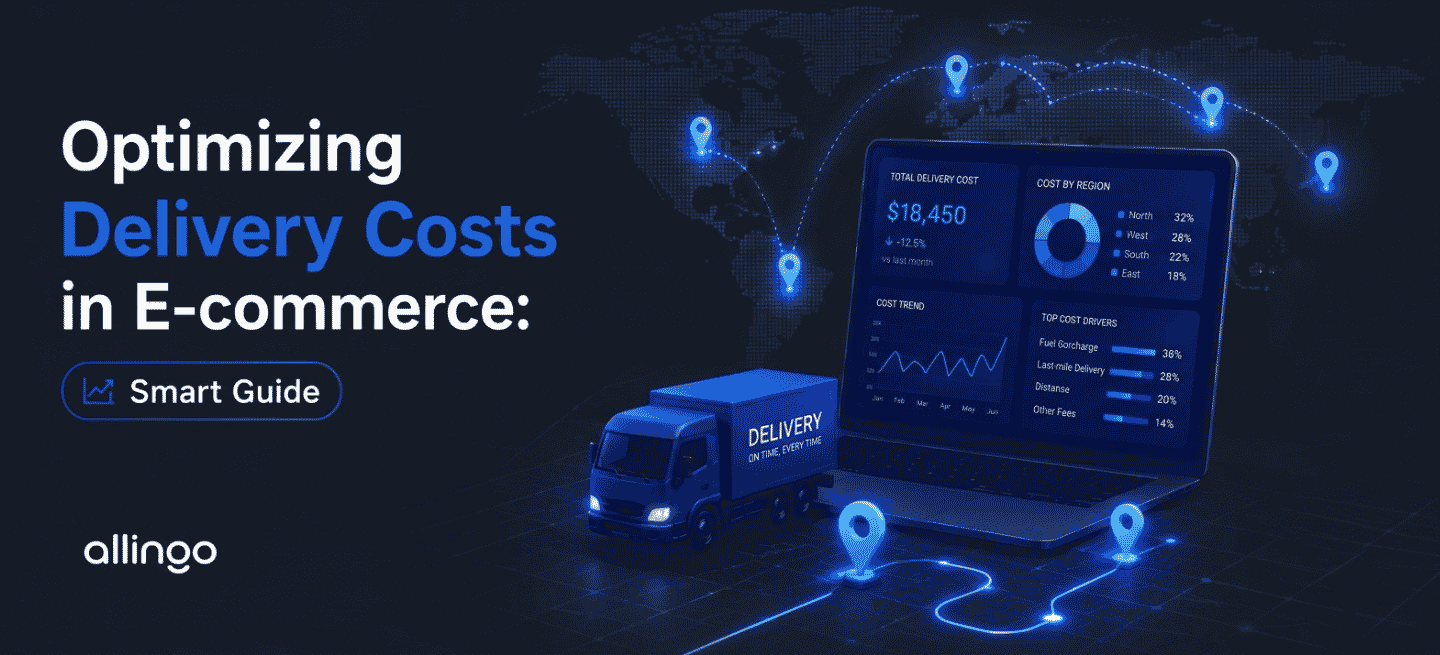
High shipping rates directly cause revenue loss at the checkout line. When customers face unexpected or excessive delivery fees, they simply abandon their carts. Optimizing Delivery Costs in E-commerce is not a secondary option; it is a fundamental requirement for maintaining market competitiveness and ensuring a healthy profit margin. By addressing logistics expenses head-on, businesses can offer better shipping terms, directly improving conversion rates.
Content Summary: Optimizing Delivery Costs in E-commerce
| Operational Challenge | Business Impact | Intelligent Solution |
|---|---|---|
| High Shipping Fees | Causes cart abandonment | Multi-partner carrier comparison |
| Last-Mile Inefficiency | Drains the logistics budget | Smart routing and alternative delivery options |
| Manual Order Processing | Increases human error and labor costs | API integrations and unified waybills |
| Fragmented Payments | Complicates financial tracking | Centralized digital wallet and automated statements |
The Hidden Financial Drains in Logistics

To effectively approach managing delivery expenses for online business, one must look beyond basic freight charges. Often, the most significant financial leaks occur in areas that are difficult to track manually.
The Last-Mile Challenge
The "last mile"—the final stage of transport from a distribution center to the end customer—is notoriously expensive. Delivering packages directly to individual doorsteps consumes a massive portion of the entire transportation budget. When a company fails to optimize this specific segment, perhaps by lacking integration with alternative pickup points or failing to route drivers efficiently, the financial losses compound rapidly.
Warehouse and Operational Inefficiencies
Operational workflows often hide silent profit killers. Time spent by employees manually typing addresses, printing individual labels from different carrier portals, and packing oversized boxes generates significant labor costs. Furthermore, manual data entry inevitably leads to address typos, resulting in failed deliveries, return fees, and frustrated customers.
Leveraging Smart Infrastructure for E-commerce
Relying on traditional negotiation tactics is often insufficient. For a smaller merchant, securing volume discounts directly with major carriers is practically impossible. This is where technology steps in to bridge the gap. Using an intelligent logistics platform is the definitive answer to How to reduce shipping costs for small businesses.
A smart delivery infrastructure platform acts as an intelligence layer connecting merchants to multiple logistics partners through a single, unified system. Instead of operating as a traditional courier, platforms like Allingo serve as a central command hub. They aggregate delivery services, allowing companies to compare, choose, automate, and monitor every shipment.
Intelligent Carrier Comparison
When you control shipping costs in ecommerce, you need the ability to choose the most efficient option for every single package. A smart platform allows users to compare multiple delivery partners instantly.
- Cheapest Option: The system instantly calculates and highlights the lowest possible delivery cost for the specific route.
- Fastest Option: For urgent consumer demands, the platform identifies the quickest delivery route.
- Best Matched: Advanced algorithms recommend the optimal carrier based on a combination of price, speed, product type, and historical success probability.
By having these options visible on one dashboard, businesses can dynamically align their shipping choices with consumer preferences. Buyers are often willing to wait longer for a package if the delivery fee is lower, meaning utilizing the "Cheapest Option" routinely saves massive amounts of capital.
Financial Visibility and Centralized Operations
A major hurdle in managing delivery expenses for online business is the fragmentation of financial data. Dealing with five different courier companies usually means dealing with five different invoicing systems, disparate credit balances, and confusing Cash on Delivery (COD) reconciliations. Modern platforms resolve this by unifying the financial ecosystem. Through a centralized dashboard, merchants gain absolute clarity over their logistics spending.
| Feature | Description | Benefit |
|---|---|---|
| One Wallet | A single digital balance funds all connected delivery partners. | Eliminates the need to manage multiple accounts and deposits. |
| Automated Statements | Financial statements are generated automatically on a weekly schedule. | Simplifies bookkeeping and provides clear expenditure tracking. |
| COD Monitoring | Dedicated tracking for Cash on Delivery amounts, separating pending, ready, and paid statuses. | Ensures healthy cash flow and prevents missing funds. |
| Unified Waybill | A single standardized label format regardless of the chosen carrier. | Streamlines warehouse packing and scanning procedures. |
With systems like Allingo, a user can easily view their credit transactions, top up their balance via simple methods like VietQR, and monitor all team member activities in one place. This level of transparency makes it remarkably simple to control shipping costs in ecommerce while simultaneously reducing the workload on the finance department.

The Power of Automation and Integrations
Logistics expenses are not limited to fuel and freight; they heavily involve human capital. When discussing How to reduce shipping costs for small businesses, automating repetitive tasks is a primary strategy.
An intelligent delivery platform integrates directly into existing business software, including Point of Sale (POS) systems, retail chains, and popular e-commerce builders like Shopify, Magento, or WordPress. This API integration facilitates a seamless flow of data. When a customer places an order, the shipment is created automatically within the delivery dashboard.
The system can automatically assign the best partner based on predefined rules. Furthermore, if an operational risk or delay is detected, smart delivery intelligence provides actionable suggestions, allowing users to switch delivery partners or service types (e.g., from Standard to On-demand) without needing to recreate the entire order. This flexibility ensures higher delivery success rates, fewer returned packages, and a drastic reduction in customer service inquiries.
Scaling Operations Without Expanding the Team
Growth should not automatically require a proportional increase in operational staff. An advanced logistics intelligence layer allows businesses to scale their daily order volume while keeping overhead costs flat.
Features like draft orders, saved addresses, and bulk shipment creation mean that a single employee can handle hundreds of orders in the time it previously took to process ten. Additionally, centralized tracking provides detailed sub-statuses. Instead of a generic "In Transit" notification, the platform can highlight specific operational delays, such as high-demand area bottlenecks or driver assignment issues. This allows the operational team to act preemptively rather than reacting to customer complaints.
Final Thoughts: The Future of Strategic Shipping
The future of retail belongs to entities that successfully merge excellent customer experiences with rigorous operational efficiency. Relying on a single courier restricts flexibility and inflates budgets.
By adopting a comprehensive delivery aggregation platform, companies transform their logistics from a costly burden into a competitive advantage. Optimizing Delivery Costs in E-commerce requires shifting from manual, fragmented processes to an automated, data-driven infrastructure.
Emphasizing intelligent matching, centralized financial control, and automated dispatching levels the playing field, allowing smaller enterprises to operate with the logistical sophistication of global giants.