How to Handle Urgent Delivery: The Ultimate Guide
When a customer finalizes a purchase, the countdown immediately begins. In contemporary commerce, a delayed package is no longer just a minor operational hiccup; it is a direct blow to brand reputation and consumer trust. Shoppers increasingly base their purchasing decisions entirely on the reliability of a merchant's logistics network. Therefore, mastering How to handle urgent delivery is no longer optional for businesses—it is a critical survival mechanism.
Quick Summary: How to handle urgent delivery
| Core Concepts | Key Insights |
|---|---|
| Primary Definition | Time-critical shipping prioritized to meet strict, uncompromising deadlines. |
| Vulnerable Industries | Healthcare, legal services, food and beverage, and high-volume online retail. |
| Operational Hurdles | High overhead costs, manual dispatch errors, and poor visibility during transit. |
| Infrastructure Solution | Utilizing a centralized logistics intelligence platform like Allingo. |
| Strategic Benefits | Lower operational costs, automated partner matching, and elevated success rates. |
Understanding the Spectrum of Fast Logistics
Fast shipping encompasses several different methodologies. Knowing how to handle urgent delivery efficiently requires a clear understanding of how it differs from standard rapid transit options.
- Same-Day Delivery: Orders are fulfilled and reach the destination on the exact day they are placed, generally restricted to standard business operating hours.
- Next-Day Delivery: A highly popular, cost-effective compromise where packages arrive the day following the order placement.
- Urgent Logistics: The absolute fastest route available. This highly specialized service bypasses regular shipment schedules, utilizes direct routes with minimal stops, and focuses entirely on meeting vital deadlines.
The Driving Force Behind High-Speed Fulfillment
The demand for instantaneous gratification is continuously reshaping supply chains. Consequently, dealing with urgent delivery requests has transitioned from an occasional emergency into a daily operational standard. This intense demand places immense pressure on logistics providers to offer quick, error-free services while strictly maintaining reliability. Failing to deliver a package on time can result in canceled contracts, spoiled perishables, or severe disruptions, depending entirely on the nature of the transaction.
Industries That Depend on Rapid Operations
While almost all sectors benefit from optimized supply chains, certain industries absolutely depend on flawless rapid logistics to maintain their daily operations.
- Healthcare and Medicine: Hospitals and specialized clinics require the immediate transfer of lab samples, vital medical equipment, and life-saving medications.
- Legal and Corporate Services: Law firms frequently operate under uncompromising filing deadlines. Important contracts and legal paperwork must reach courts or clients swiftly to avoid severe financial or legal penalties.
- Retail Marketplaces: Shoppers demand instant fulfillment. Understanding exactly how to process rush orders in ecommerce is vital during peak holiday seasons or when managing critical item exchanges and returns.
- Food and Beverage: The exponential rise of online food ordering means that restaurants and catering services must maintain the quality and temperature of perishable goods through immediate, direct transit.
Common Bottlenecks in Rapid Fulfillment
While the necessity for speed is clear, the execution remains highly complex. When managing urgent shipping request volumes, companies routinely face several severe operational hurdles.
- Resource and Infrastructure Restraints: Maintaining a reliable fleet of vehicles and having drivers constantly available at a moment's notice requires massive capital.
- Profitability and Cost Management: Expedited shipping inherently carries premium costs. Balancing driver wages, fluctuating fuel prices, and unpredictable surcharges while remaining profitable is incredibly difficult.
- Technological Limitations: Relying on manual order creation and isolated courier apps inevitably leads to human error, delayed dispatch times, and misplaced packages.
The Smart Solution: Centralizing Operations with Allingo
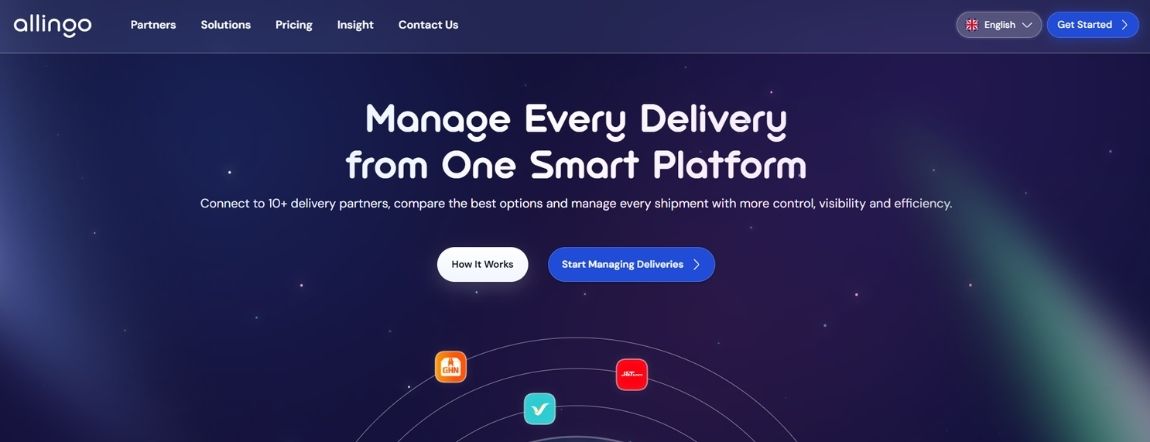
To successfully conquer these operational bottlenecks, businesses require more than just a fast courier network; they need a comprehensive logistics intelligence layer. This is precisely where a platform like Allingo becomes indispensable. Rather than managing multiple disconnected delivery applications, Allingo functions as a unified delivery aggregation and automation system.
When a time-sensitive package requires immediate dispatch, modern dashboards empower users to seamlessly select the exact type of service required. The interface distinctly separates on-demand services—designed specifically for rapid, direct drop-offs—from standard scheduled options, ensuring the right logistics path is chosen instantly.
By consolidating multiple regional and international logistics partners into one centralized dashboard, Allingo effectively solves the core problems of high operational costs, COD (Cash on Delivery) complexity, and poor shipment visibility.
Key Capabilities for Flawless Execution
Figuring out how to handle urgent delivery seamlessly without overwhelming the operational team requires deeply integrated, intelligent features.
- Advanced Delivery Intelligence: The system instantly evaluates multiple delivery partners simultaneously. It automatically identifies the cheapest, fastest, or best-matched option based on precise product types and current operational conditions.
- Urgent Order Broadcasting: When time is critical, the platform can broadcast a specific order to multiple partners at once, permanently assigning it to the very first available driver.
- Automated Partner Assignment: The system eliminates manual guesswork entirely, automatically routing the order to the courier with the highest statistical probability of success.
- Fluid Service Switching: If an unexpected issue arises, users can effortlessly switch delivery partners or change from standard to on-demand services without the need to recreate the entire waybill.
Furthermore, a centralized dashboard provides a highly detailed, comprehensive view of all active operations. Users can input precise pickup and drop-off coordinates, specify package weight and monetary value, and visually monitor available delivery partners directly on an integrated map for unparalleled real-time spatial awareness.

Step-by-Step Methodology for Flawless Operations
Mastering how to process rush orders in ecommerce involves adhering to strict, technology-driven protocols to ensure nothing falls through the cracks.
- Centralize All Tracking: Utilize a unified waybill format and a single operational dashboard to prevent scattered, disorganized data across multiple vendor apps.
- Automate Recovery Actions: Implement smart systems that proactively suggest immediate operational fixes if a driver assignment is delayed or if a high-demand area creates an unavoidable bottleneck.
- Streamline Financial Integration: Maintain a single digital wallet for all partner transactions to drastically simplify complex COD monitoring and streamline postpaid accounting settlements.
- Leverage API Integrations: Connect the core delivery API directly to backend POS systems and popular retail platforms like WordPress. This ensures seamless, automated data transfer from the checkout cart directly to the dispatch queue.
Scaling Without Expanding Headcount
The ultimate objective of efficiently managing urgent shipping request pipelines is long-term scalability. A smart decision engine allows a growing enterprise to process thousands of time-critical shipments daily without continuously hiring additional dispatch personnel. By utilizing built-in AI assistants to detect operational risks long before they cause transit failures, companies ensure total reliability, lower their overall delivery operations costs, and build profound, lasting consumer trust.
In modern logistics, success is no longer defined merely by speed, but by the intelligence and automation powering the journey.