How to Choose the Right Courier With Allingo Platform
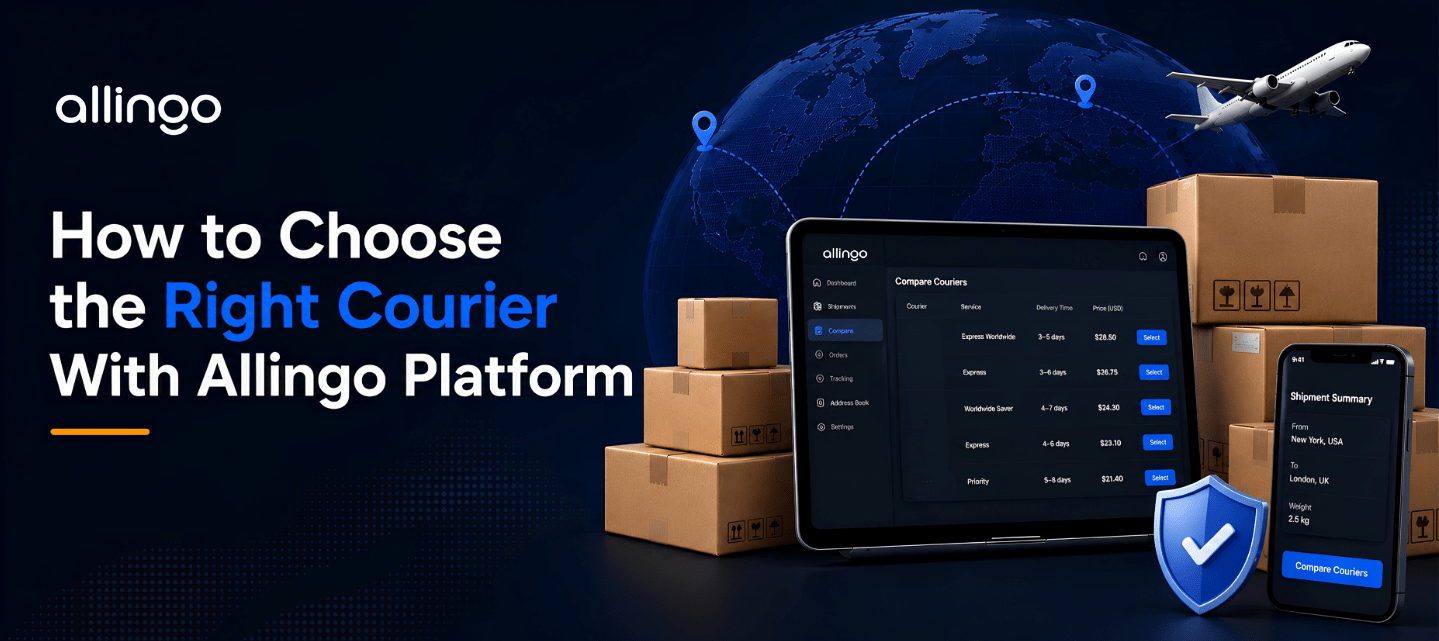
Every online order represents a binding promise between a brand and a consumer. When a shopper clicks the checkout button, they trust that their package will arrive safely, quickly, and in perfect condition. Mastering how to choose the right courier is no longer just a backend administrative task; it is a vital growth strategy that directly influences customer lifetime value, brand reputation, and profit margins. A single delayed package or broken item can trigger a chain reaction of negative reviews, chargebacks, and strained customer service resources. For expanding businesses, finding the sweet spot between transit speed, operational costs, and fulfillment reliability is a primary operational challenge. This guide provides an in-depth breakdown of exactly how to choose the right courier, what essential features to evaluate, and how leveraging modern logistics infrastructure can turn shipping from a cost center into a powerful competitive advantage.
Summary: Logistics Selection Matrix
| Evaluation Pillar | Key Requirements | Core Business Impact |
|---|---|---|
| Speed & Consistency | Same-day, next-day, and standard options; high on-time delivery rates. | Boosts customer loyalty and encourages repeat purchases. |
| Pricing Structure | Transparent base rates, fair volumetric calculations, zero hidden fees. | Protects net margins and minimizes cart abandonment. |
| Geographic Coverage | Strong domestic networks (metro and rural) and seamless international shipping. | Unlocks new target markets and expands geographic reach. |
| Operational Visibility | Real-time tracking APIs, automated status alerts, clear milestones. | Lowers support ticket volumes and enhances post-purchase trust. |
| Return Management | Cost-effective reverse logistics and clear Return-to-Origin (RTO) rules. | Recovers inventory swiftly and reduces operational losses. |
Why the Post-Purchase Journey Defines Brand Success
Modern consumers do not separate the online shopping experience from the physical delivery process. If a delivery driver handles a package poorly, or if an item arrives late, the consumer attributes that failure directly to the e-commerce brand. Therefore, choosing a delivery partner for ecommerce requires an analysis of how a provider acts as a direct extension of standard customer service.
Overcoming Cart Abandonment
High, unexpected shipping fees are a primary driver of cart abandonment. When a delivery provider passes inefficient operational costs onto a business, the business is forced to increase consumer shipping fees. Identifying an economical logistics setup allows brands to offer attractive flat-rate or free-shipping thresholds, which helps convert casual browsers into paying customers.
Establishing Trust with Transparent Tracking
Anxiety often builds between order placement and delivery arrival. Buyers expect complete clarity regarding package locations. Real-time tracking and automated status notifications mitigate this friction. When consumers can easily monitor their shipments, support teams receive significantly fewer inquiries, allowing them to focus on high-value tasks.
Supporting Operational Scalability
E-commerce volume is rarely static. Marketing campaigns, seasonal holiday spikes, and viral trends can cause sudden surges in order numbers. A rigid fulfillment setup can fail under sudden pressure. Businesses must establish a flexible infrastructure capable of handling volume spikes effortlessly without a corresponding drop in delivery quality.
Key Factors: How to Select a Shipping Carrier
To truly master how to choose the right courier, operational managers must look past basic marketing claims and focus directly on concrete performance metrics.
1.Delivery Speed and Consistency
While next-day delivery is highly valued in major metropolitan hubs, overall consistency matters more than raw speed. If a provider guarantees a three-day delivery window, they must meet that promise consistently. Evaluate how providers perform during high-volume periods, such as year-end holidays, to ensure they can maintain their service commitments. This is a fundamental step in how to select a shipping carrier that supports long-term growth.
2.Rate Transparency and Hidden Surcharges
Logistics pricing models can be complex. Base rates may seem highly competitive until additional fees—such as fuel surcharges, residential delivery fees, remote area penalties, and volumetric weight rules—are calculated. Request full rate sheets and run historic order data through their calculators to determine the true, comprehensive cost per shipment.
3.Geographic Reach and Local Expertise
A provider that operates efficiently in urban zones may have limited capabilities in rural or remote regions. If a business plan includes scaling into regional markets, the selected network must possess verified last-mile infrastructure in those areas. For international expansion, verify their expertise in customs clearance and cross-border regulatory compliance.
4.Handling Fragile and High-Value Cargo
Items such as electronics, cosmetics, and glassware require careful handling. Review a potential partner's historic damage claim ratios and insurance frameworks. A straightforward, transparent claims process indicates an organization that stands behind its operational quality.
Strategic Tips for Selecting a Courier Service
Before signing formal service contracts, implementing a structured verification process can prevent severe operational disruptions. Here are practical tips for selecting a courier service:
- Execute Test Shipments: Never deploy a new logistics service at scale without prior testing. Send sample packages to various zones to measure actual transit times, physical package conditions upon arrival, and tracking feed accuracy.
- Analyze Service Level Agreements (SLAs): Examine all contract terms carefully. Ensure there are explicit definitions of guaranteed delivery timelines, clear financial credits or penalties for systemic delays, and structured protocols for resolving lost package disputes.
- Prioritize Reverse Logistics: Return processing is an unavoidable component of modern retail. Ensure that return shipping is as streamlined as outbound distribution. A complex, slow, or expensive return mechanism damages consumer satisfaction.
- Verify API Stability: A logistics provider might have an extensive physical fleet, but if their digital infrastructure is outdated, manual order processing errors will multiply. Confirm that their developer APIs are modern, well-documented, and capable of automated order syncing.
Applying these tips for selecting a courier service guarantees that a business is protected from costly logistical bottlenecks.
Moving Beyond a Single Carrier Strategy
The conventional approach to e-commerce fulfillment involves partnering with a single traditional courier. While this approach appears simple, it introduces a single point of failure into the supply chain. If that specific carrier encounters capacity issues, labor strikes, or localized network backlogs, the entire fulfillment chain stops.
For this reason, smart brands are shifting away from rigid single-carrier agreements. Instead of focusing entirely on how to select a shipping carrier in isolation, forward-thinking businesses are adopting unified delivery aggregation platforms. Managing multiple courier applications independently creates administrative complexity, but utilizing an intelligent logistics layer allows brands to access multiple delivery networks through a single, centralized system.
Allingo: The Intelligent Delivery Infrastructure for Modern Retail
To solve the challenges of fragmented shipping networks, high operational costs, and manual order management, successful businesses are leveraging Allingo.
Allingo is not a traditional courier service or a basic logistics marketplace. Instead, it serves as an intelligent delivery infrastructure platform and smart decision engine that connects businesses to an aggregated network of multiple logistics partners through a single dashboard or robust API integration.
By unifying the logistics landscape, Allingo allows e-commerce operations to instantly compare, automate, monitor, and optimize their entire shipping workflow.
Intelligent Delivery Matching and Automation
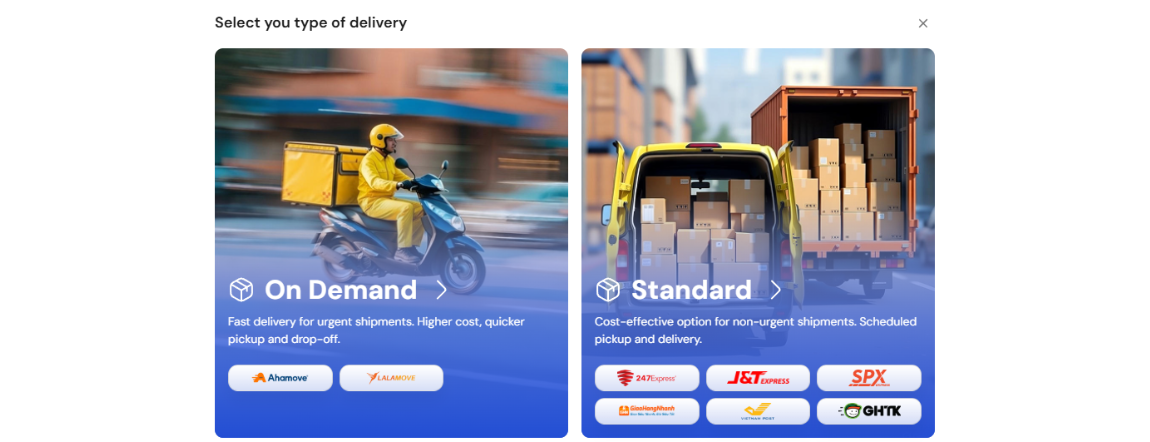
Evaluating options manually for every package is impossible at scale. Allingo solves this by utilizing advanced delivery intelligence to evaluate every order automatically based on real-time pricing, estimated transit speeds, item categories, and historical driver performance.
Through the auto assign delivery partner Allingo utilizes, shipments are systematically matched with the optimal carrier instantly, ensuring high success rates without human error. For highly time-sensitive orders, the platform can broadcast the shipment to multiple localized networks simultaneously, assigning the order to the first available courier. This effectively automates the complex process of choosing a delivery partner for ecommerce.
Centralized Management and Enhanced Operational Visibility
Operating via multiple separate delivery applications creates immense tracking confusion. Allingo consolidates this data into a single, comprehensive overview screen. The system provides highly granular "sub-statuses" that extend far beyond standard tracking points—alerting managers to issues such as delayed driver assignments or high-demand area constraints before they result in a failed delivery.
Furthermore, Allingo generates a unified waybill format across all partner carriers, standardizing label printing and warehouse packaging routines.
Simplified Financial and Team Operations
Handling multiple individual logistics invoices increases administrative burdens for finance teams. Allingo eliminates this complexity by introducing a "One Wallet" unified balance system. Businesses maintain a single account balance via convenient VietQR top-ups to pay for shipments across all supported courier networks. The platform also offers robust cash and postpaid support, coupled with detailed COD monitoring tools to track remittance schedules closely.
Seamless Systems Integration for Enterprise Scalability
Whether an enterprise relies on standard point-of-sale (POS) tools, setups like Pancake, or enterprise retail software, Allingo integrates smoothly via native APIs. This connectivity enables automatic order creation and real-time freight pricing updates at customer checkouts. Retail chains and growing social commerce brands can scale up their daily shipment volumes smoothly without needing to hire additional administrative staff.
Conclusion: Engineering a Smarter Shipping Strategy
When evaluating how to choose the right courier, the modern answer does not lie in finding one single perfect carrier. It lies in building a flexible, tech-driven multi-carrier infrastructure. While balancing shipping costs and performance metrics can be complex, adopting automated aggregation platforms removes the friction from last-mile fulfillment.
By implementing smart delivery systems, brands secure lower operational costs, faster transit times, and improved delivery success rates. Transitioning away from manual carrier selection to an automated framework like Allingo protects profit margins and ensures that every customer receives a premium post-purchase experience.